


 +86 18130251359
 teflowpumps@tlpumps.com


In chemical production, mixed acid solution transfer is a frequent and core process, commonly seen in metal pickling, surface treatment, hydrometallurgy, PCB etching and other processes. Unlike single sulfuric acid, hydrochloric acid or nitric acid media, mixed acid is a mixed system of two or more strong corrosive acids. It features complex composition, extremely high corrosivity, accompanied by concentration fluctuations, temperature variations and trace impurity particles, which impose stringent requirements on the material sealing and structural reliability of transfer pumps. Improper pump selection easily leads to pump body corrosion and perforation, seal failure and medium leakage, causing material loss as well as safety and environmental risks.
I. Three Core Challenges of Mixed Acid Transfer
Common mixed acid combinations include sulfuric-nitric mixed acid, sulfuric-hydrochloric mixed acid, nitric-hydrochloric mixed acid, and hydrofluoric-acid-containing mixed acid. Mixed acids with different ratios differ greatly in corrosion characteristics and physical parameters, serving as the core basis for equipment selection. The main operating challenges fall into three points:
1. Enhanced composite corrosion: The corrosion pattern of single acid is stable, yet mixed acids produce synergistic corrosion effects. For instance, nitric-fluoric mixed acid has both strong oxidizing property and fluoride ion erosion. Ordinary stainless steel and conventional plastics can be rapidly corroded and damaged with drastically shortened service life. Even 316L and 2205 duplex stainless steel cannot operate stably for long under some mixed acid conditions.
2. Wide fluctuation of operating parameters: Temperature changes occur in many mixed acid processes. Rising medium temperature in pickling further accelerates corrosion rate. Some mixed acid streams carry metal oxides and fine solid residues, which tend to abrade flow parts and cause erosion damage to impellers and flow channels. Fluctuations in flow rate and pressure also increase load on internal pump components and trigger vibration, cavitation and other issues.
3. High risk of medium leakage: Most mixed acids are highly irritating and toxic. Once leaking from the pump shaft seal, they will corrode surrounding equipment, burn operators, and generate waste gas and waste liquid to pollute the environment. Traditional mechanical seal centrifugal pumps have vulnerable shaft seals, which are prone to erosion and wear during long-term operation in corrosive media, forming a high-risk leakage point.
II. Main Suitable Pump Types for Mixed Acid Transfer & Application Scenarios
1. Fluoroplastic Magnetic Drive Pump: Preferred for General Mixed Acid Transfer
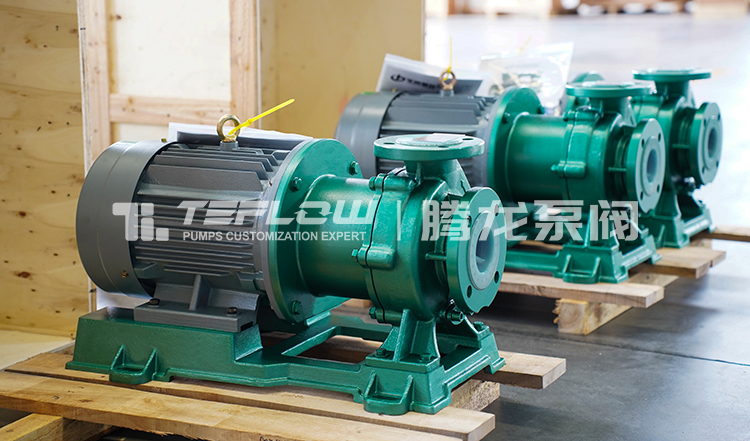
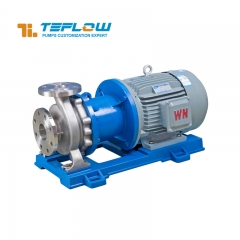
Fluoroplastic magnetic drive pumps are the first choice for mixed acid transfer under small-to-medium flow and normal operating conditions. They are compatible with most clean, particle-free mixed acid systems at ambient temperature, including common corrosive media such as sulfuric-nitric mixed acid and dilute sulfuric-hydrochloric mixed acid.
Its core advantage is seal-free and zero leakage. Adopting magnetic coupling transmission structure, it completely eliminates leakage risks of traditional mechanical seals. It is perfectly suited for toxic, strongly corrosive mixed acid media to avoid safety and environmental hazards. Flow parts of the pump are made of F46 and PFA fluoroplastics with excellent resistance to composite corrosion, resisting corrosion by most mixed acids at operating temperatures ≤90℃.
Application scenarios: Continuous transfer on chemical production lines, pickling circulation, chemical dosing transfer, atmospheric mixed acid transfer at small and medium flow rates. **Not suitable** for high-temperature, high solid particle and high-pressure conditions.
2. Steel Lined Fluorine Centrifugal Pump: Main Option for Large-Flow Mixed Acid Transfer
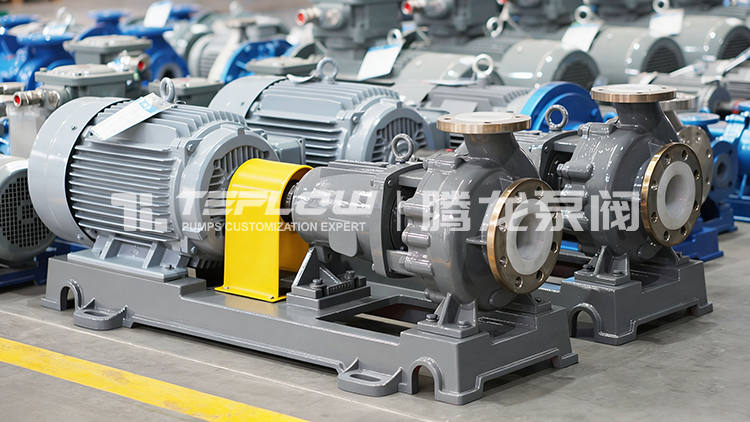
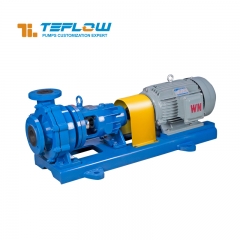
Steel lined fluorine centrifugal pumps adopt a composite structure of carbon steel shell lined with fluoroplastic. They combine high strength and high pressure resistance of carbon steel shell with supreme anti-corrosion performance of fluoroplastics, acting as the core main pump type for large-flow mixed acid transfer in chemical industry. Its adaptability and stability far exceed ordinary lined plastic pumps.
The pump is equipped with exclusive F46, PFA fluoroplastic lining. Without replacing lining materials, it can adapt to various mixed acid systems from ambient temperature to 90℃ and low to high concentration. It delivers outstanding resistance to composite corrosion, medium aging and permeation, perfectly handling strongly corrosive media like sulfuric-nitric mixed acid and sulfuric-hydrochloric mixed acid, while featuring good wear and erosion resistance.
Application scenarios: Dosing of strongly corrosive mixed acid in environmental wastewater treatment, large-flow circulating transfer for large-scale industrial pickling lines, bulk transfer of concentrated mixed acid in chemical storage tanks, medium & normal temperature strongly corrosive mixed acid with low impurities. It is a cost-effective choice for industrial large-flow mixed acid delivery.
3. Air Operated Diaphragm Pump / Fluorine Lined Mortar Pump: Special Pumps for Particle-Containing Mixed Acid
For mixed acid slurry with solid residues, fine particles and high viscosity in industrial production, magnetic drive pumps and ordinary centrifugal pumps are prone to clogging, abrasion and damage. Under such circumstances, diaphragm pumps and mortar pumps become the optimal solution.
Diaphragm pumps have no shaft seal and no clogging risk. Pump heads can adopt four high-performance anti-corrosion fluoroplastics: PTFE, PVDF, F46 and PFA. They resist composite corrosion from mixed acids and feature excellent wear resistance against solid particles, capable of conveying mixed acid media with impurities, sediment and slight viscosity. They support dry running and self-priming with strong working condition adaptability. Air operated diaphragm pumps have no motor explosion hazard, better suited for flammable and explosive chemical workshops.
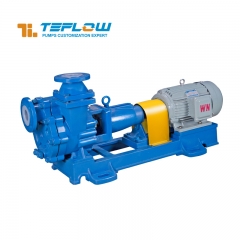
If mixed acid contains a large amount of solid sediment and pickling residues with high solid content, fluorine lined mortar pumps are preferred. Their wide flow passages and UHMWPE lining offer strong resistance to particle erosion for transferring particle-laden mixed acid waste liquid. The drawback is the fitted mechanical seal requiring regular maintenance.
Application scenarios: Pickling waste liquid transfer, particle-containing mixed acid handling, intermittent chemical dosing, mixed acid conditions with high impurities and variable viscosity.
III. Key Points for Mixed Acid Pump Selection
1. Confirm medium parameters: Clarify mixed acid ratio, concentration of each component, operating temperature, presence of solid particles and medium viscosity;
2. Define operating requirements: Confirm required flow rate, head, transfer mode (continuous / intermittent), self-priming need and workshop explosion-proof requirements;
3. Match pump structure: Select fluoroplastic magnetic drive pump for clean standard conditions; steel lined fluorine centrifugal pump for large-flow transfer; diaphragm pump or fluorine lined mortar pump for particle-laden media;
4. Select compatible materials: Choose lining / flow part materials according to temperature and concentration, and reserve operating margin instead of full-load operation;
5. Configure auxiliary accessories: For high-risk strongly corrosive mixed acid applications, prioritize leak-free structures equipped with explosion-proof motors and corrosion-resistant seals to improve operation safety.
There is no universal "one-size-fits-all pump" for mixed acid solution transfer. The core is to select pump type and materials precisely according to working conditions. Proper equipment selection can prevent leakage, corrosion and shutdown failures, greatly cut equipment replacement and maintenance costs, and is critical for stable, safe and efficient operation of chemical mixed acid processes.



 +86+0563-5093318
