


 +86 18130251359
 teflowpumps@tlpumps.com

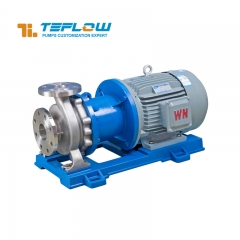
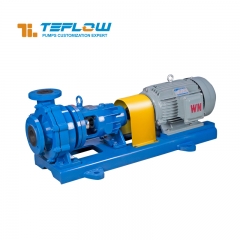
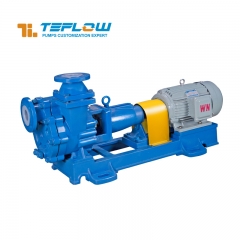
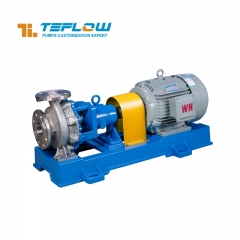

In harsh chemical environments involving strong corrosion, high purity, or high temperature, fluorine-lined magnetic pumps, centrifugal pumps, and other equipment serve as critical safeguards for the safe conveyance of materials. Their core protective component—the fluoroplastic liner—directly determines the pump's reliability, service life, and cost-effectiveness. When faced with the four mainstream materials (PFA, PVDF, ETFE, and FEP), how can one make an accurate selection? Below, we will conduct an in-depth analysis of their characteristics, differences, and optimal application scenarios.
I. Overview of Material Properties: The Origins and Positioning of the Four Fluoroplastics
First, let us understand these four materials from the perspective of their chemical nature and basic properties:
1.PVDF (Polyvinylidene Fluoride)
Essence: A fluorine-containing semicrystalline polymer with a fluorine content of approximately 59%, the lowest among the four.
Core Label: King of Mechanical Strength, Cost-Effective First Choice. It stands out for its excellent mechanical strength, rigidity, impact resistance, and wear resistance, along with good processability.
2.FEP (Fluorinated Ethylene Propylene)
Essence: A melt-processable modified version of PTFE (Polytetrafluoroethylene).
Core Label: Easy-to-Process Version of PTFE. It inherits PTFE's excellent chemical inertness and broad temperature resistance range, but its mechanical strength, rigidity, and temperature resistance are slightly inferior to PFA.
3.PFA (Perfluoroalkoxy Alkane)
Essence: Another high-performance melt-processable perfluoropolymer with the highest fluorine content (equivalent to PTFE).
Core Label: Noble of Fluoroplastics. It possesses nearly all of PTFE's outstanding properties (such as ultra-strong corrosion resistance and ultra-high purity), while also featuring good hot melt fluidity, making it easy to produce pore-free thick liners.
4.ETFE (Ethylene-Tetrafluoroethylene Copolymer)
Essence: A partially fluorinated fluoropolymer with a fluorine content of approximately 50%.
Core Label: Champion of Toughness, Expert in Fatigue Resistance. It boasts excellent mechanical toughness, impact resistance, shear resistance, and outstanding wear resistance, as well as high transparency.
II. In-Depth Analysis and Selection Guide
1.PVDF: The Versatile, Cost-Effective Workhorse
Advantages: Excellent mechanical properties, good corrosion resistance (especially to halogens, acids, and alkalis), superior fatigue resistance, and low cost.
Limitations: Limited resistance to fuming sulfuric acid, hot concentrated alkalis, and a few strong solvents (e.g., ketones, esters); relatively low maximum temperature resistance.
Typical Applications: Widely used in the conveyance of media such as hydrochloric acid, sulfuric acid, brine, and bromine at temperatures ≤120℃. It is the cost-effective leader in the chemical, electroplating, and lithium battery industries.
2.FEP: The Balancer with Broad Corrosion Resistance
Advantages: Extremely wide corrosion resistance range, good impermeability, high transparency for easy observation, and better fluidity than PTFE for molding.
Limitations: Moderate mechanical strength, relatively poor vacuum resistance and wear resistance, and susceptibility to "cold flow".
Typical Applications: Suitable for strong corrosive media (e.g., hydrofluoric acid, phosphoric acid, mixed acids) under medium-low pressure and medium-low temperature (≤150℃), as well as high-purity applications. Not recommended for severe wear or high vacuum conditions.
3.PFA: The Ultimate Solution for Harsh Working Conditions
Advantages: Combines ultra-strong corrosion resistance, ultra-high purity, excellent impermeability, and a broad temperature resistance range, with mechanical properties superior to FEP.
Limitation: High price, which is the main restrictive factor.
Typical Applications: Semiconductor ultrapure chemicals, pharmaceutical intermediates, high-temperature concentrated acids, highly permeable media (e.g., chloride ions), and critical processes requiring ultimate safety and purity.
4.ETFE: The Tolerant of Mechanical Stress
Advantages: Exceptional mechanical toughness, impact resistance, wear resistance, and shear resistance, with an extremely long fatigue life.
Limitations: Narrower chemical corrosion resistance range than FEP/PFA (especially to strong oxidizing acids), high processing difficulty, and high cost.
Typical Applications: Suitable for harsh mechanical conditions involving particles, easy crystallization, frequent start-stop cycles, or risks of cavitation and vibration, provided the medium falls within its corrosion resistance range.
III. Comprehensive Selection Logic and Recommendations
Selecting a liner material is not a simple comparison of performance tables, but should follow the core logic of "medium matching first, working condition requirements second, and cost-effectiveness balance last":
1.Primary Step: Medium and Temperature Analysis
Clarify the exact composition, concentration, and temperature of the conveyed medium. Conduct an initial selection by referring to the corrosion resistance charts/Isothermal Corrosion Resistance Chart of each material. This is an uncrossable red line.
2.Key Considerations: Working Condition and Mechanical Requirements
Presence of particles/wear? → Prioritize PVDF or ETFE.
High vacuum or negative pressure? → Avoid FEP; prefer PFA or PVDF.
Cavitation, vibration, or drastic temperature changes? → ETFE's fatigue resistance advantage becomes prominent.
Need for high purity and low precipitation? → PFA and FEP are the top choices.
3.Final Decision: Balancing Cost and Service Life
On the premise of meeting process safety and service life requirements, consider the initial investment and maintenance costs. PVDF can often satisfy most conventional strong acid conditions and is an economical choice; in critical links involving safety, environmental protection, and continuous production, investing in PFA or ETFE may yield a longer maintenance-free period and lower total life cycle cost (TLCC).
Conclusion:
There is no "best" fluorine-lined material, only the "most suitable" one. PVDF dominates the mainstream market with its balanced performance and cost; FEP excels in specific corrosive fields; PFA is the ultimate weapon for addressing challenges of ultra-high temperature, ultra-strong corrosion, and ultra-high purity; ETFE provides a robust toughness solution for working conditions with harsh mechanical stress. Accurate material selection starts with a thorough understanding of the medium and working conditions, and ends with a wise balance of material performance and cost. In complex chemical processes, the correct material selection itself is a crucial process safety safeguard.



 +86+0563-5093318
