


 +86 18130251359
 teflowpumps@tlpumps.com

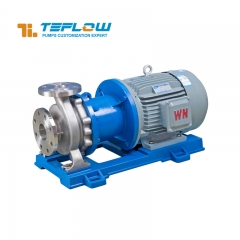
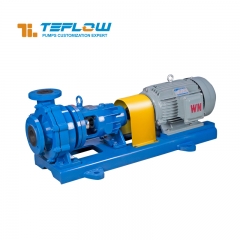
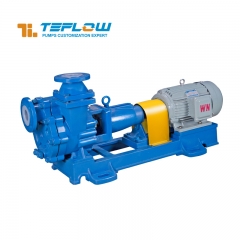
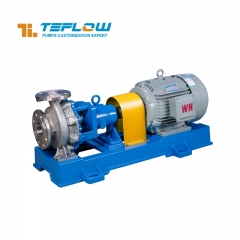

As modern industry accelerates its transformation toward green‑oriented cleanliness, high‑efficiency energy conservation and precise controllability, process standards across various sectors keep rising, bringing brand‑new requirements for the safety, stability and adaptability of fluid‑handling equipment. Constrained by material properties and structural design, conventional metal pumps and ordinary plastic pumps can hardly satisfy harsh working conditions featuring heavy corrosion, high‑purity requirements and high‑precision delivery. Against this backdrop, fluoroplastic pumps, with their unique material strengths and comprehensive performance adaptability, are widely adopted in core sectors including lithium‑battery manufacturing, semiconductor processing, fine chemical engineering and wastewater treatment. They have become indispensable fluid‑transfer hardware for advanced industrial systems and core supporting equipment for the clean‑transition and high‑end upgrading of industries.
I. Empowered by Core Materials: Ultimate Corrosion Resistance and Superior Stability
The core competitiveness of fluoroplastic pumps stems from the distinctive physicochemical properties of high‑grade fluoroplastics such as PFA, FEP and PVDF, which constitute their key advantage over traditional pump equipment. The molecular structure of fluoroplastics contains high‑energy carbon‑fluorine bonds. Together with dense crystalline morphology, they form a natural chemical barrier with extreme chemical inertness. They can resist erosion by nearly all corrosive media including strong acids, strong alkalis, powerful oxidants and organic solvents, such as highly destructive industrial fluids like concentrated sulfuric acid, hydrofluoric acid and aqua regia. This fundamentally addresses long‑standing pain points of conventional stainless‑steel and alloy pumps (prone to corrosion and rust) as well as ordinary plastic pumps (vulnerable to aging and permeation).
Unlike traditional metal pumps that suffer wear, leakage and rust within merely months under corrosive service, fluoroplastic pumps deliver greatly improved weather resistance and medium compatibility. Meanwhile, premium fluoroplastics release no toxic substances and do not chemically react with high‑purity fluids, preventing secondary contamination of transported media. For high‑temperature scenarios, certain high‑end fluoroplastics enable long‑term stable operation up to 260 °C, combining corrosion resistance and high‑temperature tolerance. They perfectly cope with diverse extreme chemical‑process conditions and substantially boost the stability and safety of industrial production.
II. Adaptable to High‑end Precision Working Conditions to Meet Core Demands of Emerging Industries
The rapid growth of strategic emerging industries such as new‑energy and semiconductor sectors as well as high‑end fine chemicals has reshaped the performance benchmarks for industrial fluid transportation. Apart from corrosion resistance, extremely high standards are imposed on medium purity, delivery accuracy and sealing performance — requirements well met by fluoroplastic pumps.
In semiconductor processing, ultrapure water and high‑purity acid‑base electronic chemicals are used for chip fabrication and wafer cleaning; medium purity directly determines chip yield. Fluoroplastic pumps feature smooth inner surfaces with no impurity adsorption or substance leaching. They maintain full‑process fluid purity and avoid metallic‑ion contamination, satisfying production requirements for nanometer‑scale precision manufacturing. In the lithium‑battery new‑energy industry, highly corrosive lithium‑special solvents and acid‑base slurries are handled during electrolyte preparation and cathode‑anode material production. Fluoroplastic pumps reliably withstand complex corrosive environments and guarantee continuity and high quality in new‑energy‑material manufacturing.
For fine‑chemical and water‑treatment applications, fluoroplastic pumps handle corrosive materials in fine‑chemical synthesis and pharmaceutical‑intermediate production, as well as acid‑alkali waste liquids and oxidants in industrial wastewater and waste‑gas treatment. Working conditions in these scenarios are complicated and highly corrosive. Thanks to broad‑spectrum medium compatibility, fluoroplastic pumps stably process diverse complex media. Their leak‑proof sealing design effectively eliminates safety hazards and environmental pollution caused by chemical‑medium spillage, complying with development requirements for clean production and regulatory compliance.
III. Optimized Structure: High Efficiency, Energy Saving and Low Operation‑Maintenance Costs
Beyond material merits, continuous technical iteration has brought comprehensive upgrades to structural design and operating performance of modern fluoroplastic pumps, satisfying modern industry’s pursuit of high efficiency, low carbon footprint and low‑cost operation. Traditional pumps commonly suffer rough flow channels, medium residue, high energy consumption, blockage risks and cumbersome maintenance. By contrast, fluoroplastic pumps adopt sophisticated hydrodynamic design. Their smooth inner pump surfaces and dead‑zone‑free flow channels effectively reduce medium adhesion, crystallization and clogging. Transportation efficiency is markedly improved while fluid resistance is lowered. Their energy consumption is far below that of conventional pump types, aligning with the industrial trend toward energy conservation and cost reduction under the “Dual‑Carbon” strategy.
In terms of sealing and driving structures, most high‑end fluoroplastic pumps realize leak‑free operation. This eliminates safety risks arising from corrosive‑medium leakage and cuts medium loss and environmental pollution. Furthermore, compact equipment layout and mature modular design facilitate disassembly and inspection. Wear‑resistant and heat‑resistant matching components extend service life significantly. Compared with metal pumps, they achieve much lower annual maintenance frequency and repair expenditure, helping enterprises cut operational‑maintenance costs and raise overall production‑line efficiency.
IV. Aligned with Industrial‑Upgrading Trends: Becoming Indispensable Industrial Equipment
Globally, industries are advancing toward high‑end sophistication, refinement, environmental friendliness and enhanced safety. Traditional fluid‑transfer equipment featuring extensive operation, high loss and high risk is gradually phased out by the market. On one hand, increasingly stringent environmental regulations demand zero‑leakage and zero‑pollution production workflows in chemical, water‑treatment and other industries. On the other hand, rapid expansion of high‑end manufacturing such as new‑energy and semiconductor sectors fuels explosive growth in demand for transporting high‑purity and strongly corrosive media.
Integrating multiple strengths including outstanding corrosion resistance, high‑purity adaptability, safe leak‑free performance, energy‑saving operation and convenient maintenance, fluoroplastic pumps remedy performance shortcomings of legacy equipment and precisely fulfill demands for process, environmental and safety upgrades across industries. Their application scope keeps expanding from conventional chemical production to high‑end intelligent manufacturing, from civil water treatment to precision electronics fabrication, with rising market penetration. They have become pivotal hardware for advanced industrial systems to secure stable processes, uphold safety baselines and realize green production.
Moving forward, alongside continuous refinement of industrial processes and expansion of high‑end manufacturing sectors, high‑performance and highly adaptable fluoroplastic pumps will keep evolving. They will replace traditional equipment in more high‑end and extreme industrial scenarios and serve as important support for industrial‑equipment upgrading and high‑quality industrial development.



 +86+0563-5093318
