


 +86 18130251359
 teflowpumps@tlpumps.com

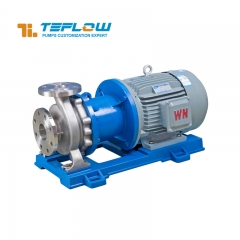
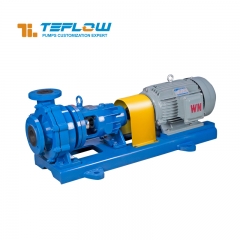
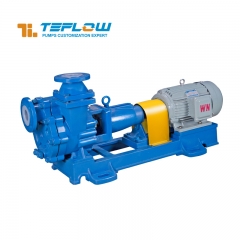
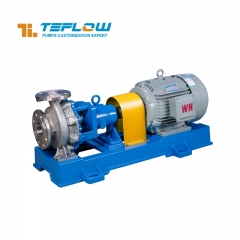

Thanks to leak-free performance and excellent corrosion resistance, magnetic drive pumps are widely used in fine chemical, pharmaceutical, electroplating, environmental protection and other industries, undertaking the transportation of hazardous media such as strong acids, strong alkalis and organic solvents. However, with the increasing application of magnetic drive pumps, a common misconception has emerged: many regard them as an all-purpose solution for corrosive working conditions and believe they are compatible with all corrosive media and operating environments.
In fact, magnetic drive pumps have clear application limitations. Their drawbacks are particularly prominent in scenarios involving high-viscosity media, extreme temperatures, particle-laden fluids and fluctuating working conditions. Blind selection will not only cause frequent equipment failures, but also trigger potential safety hazards and raise production costs.
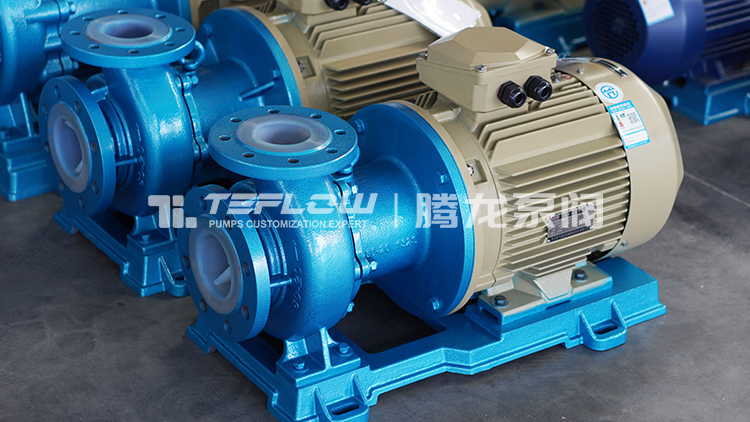
The core advantages of magnetic drive pumps stem from their unique magnetic coupling transmission structure. Eliminating the mechanical seal adopted by traditional centrifugal pumps, they transmit power through magnetic force between inner and outer magnetic rotors. The isolation sleeve completely separates the motor from the pump chamber, fundamentally eliminating medium leakage, which is the key reason for their popularity in corrosive service. Meanwhile, by adopting corrosion-resistant materials including FEP, PFA fluoroplastics, 316L stainless steel and Hastelloy alloy, these pumps can resist erosion from most corrosive media and achieve stable fluid delivery. Nevertheless, such adaptability has its limits. Once operating conditions exceed design thresholds, pump performance will drop sharply and even suffer irreversible damage.
1. High-Viscosity Media
Magnetic drive pumps are hydraulically designed primarily for low-viscosity fluids with optimized flow structures suited to high fluidity, generally applicable to media with viscosity ≤50 mPa·s. Exceeding this standard will lead to a sharp performance decline.
When conveying high-viscosity corrosive media such as high-concentration viscous acid liquid, corrosive slurry and sticky organic solvents, poor fluidity greatly increases impeller rotation resistance, resulting in drastically reduced flow rate and head, with operational efficiency dropping by 10% to 30%. It also intensifies eddy current loss of the magnetic coupler, causing excessive motor load and even motor burnout under long-term operation.
In addition, high-viscosity media damage the self-lubrication environment of sliding bearings. Since the sliding bearings of magnetic drive pumps rely on conveyed media for lubrication, viscous fluids prevent the formation of lubricating films, drastically increasing bearing friction loss, shortening service life and easily causing bearing jamming and impeller stagnation.
2. Particle-Laden Media
The leak-free superiority of magnetic drive pumps relies on precise matching of isolation sleeves, bearings, impellers and other components, which impose strict requirements on medium cleanliness. Solid particles (magnetic or non-magnetic) in fluids will cause irreversible triple damage to equipment, making magnetic drive pumps strictly prohibited for corrosive working conditions with particle impurities.
First, collapse of bearing system. Silicon carbide sliding bearings depend on medium self-lubrication; embedded particles form abrasive wear, accelerate bearing deterioration, block lubricating film formation and trigger dry friction overheating leading to bearing expansion and seizure.
Second, failure of magnetic coupling. Particles invading the 0.5-1mm magnetic gap sharply raise operational resistance and cause magnetic slip with speed loss exceeding 10%. High friction heat further demagnetizes magnetic rotors, surges eddy current loss and greatly reduces equipment efficiency.
Third, isolation sleeve penetration risk. To ensure efficient magnetic transmission, isolation sleeves are manufactured into thin-wall structures of 0.8-1.5mm thickness. High-speed hard particles continuously scour and scratch the sleeves, eventually causing perforation, medium leakage and even damage to magnetic components and motors.
3. Extreme Temperatures
As a core component, the magnetic coupler adopts magnetically sensitive materials. Excessively high or low temperatures will deteriorate magnetic properties and lead to equipment malfunction, restricting its application in corrosive environments with extreme temperatures.
Under high-temperature corrosive conditions, apart from magnetic rotor demagnetization risks, isolation sleeves are also severely affected. Uneven thermal distribution causes sleeve bulging and deformation, widening the magnetic gap. Since magnetic force attenuates in inverse proportion to the square of magnetic gap distance, torque transmission insufficiency is aggravated, and sleeve rupture and medium leakage may occur in severe cases.
In low-temperature environments below -20℃, fluoroplastic isolation sleeves become brittle and prone to cracking and breakage. Metal pump casings and impellers may face startup difficulty and impeller frost cracking due to medium solidification and sudden viscosity rise. Even low-temperature modified materials can only slightly improve low-temperature adaptability, failing to fundamentally resolve structural and performance damage caused by extreme low temperatures.
4. Fluctuating Working Conditions
Frequent flow and pressure fluctuations as well as frequent start-stop operations are common in some chemical corrosive processes. Although the magnetic coupling structure offers certain overload protection, it shows poor adaptability to unstable operating conditions. Long-term service under fluctuating conditions significantly shortens equipment lifespan and increases maintenance costs.
Fluctuating working conditions mainly bring two major impacts. On one hand, frequent changes in flow and pressure deviate pump operating points from the high-efficiency range, inducing cavitation and vibration. Magnetic drive pumps are highly sensitive to cavitation; when net positive suction head available is lower than required net positive suction head, sudden flow drop and intensified vibration occur, especially obvious when conveying volatile corrosive media.
On the other hand, frequent start-stop leads to medium loss inside pump chambers, resulting in dry friction of unlubricated bearings. Repeated magnetic impact accelerates magnetic rotor demagnetization, and rapid temperature alternations cause fatigue damage to isolation sleeves.
Conclusion
There is no doubt that magnetic drive pumps possess outstanding advantages in corrosive working conditions, and their leak-free feature provides vital guarantees for safety and environmental protection in chemical production. However, they are not universal pumping equipment.
During chemical pump selection, in addition to medium corrosivity, comprehensive evaluation shall be conducted on medium viscosity, particle content, temperature, as well as working condition stability, pressure, flow rate and other parameters. Scientific assessment of medium characteristics and operating conditions based on actual site requirements and reasonable pump type selection are essential to realize stable equipment operation, cut production costs and ensure safe production.



 +86+0563-5093318
